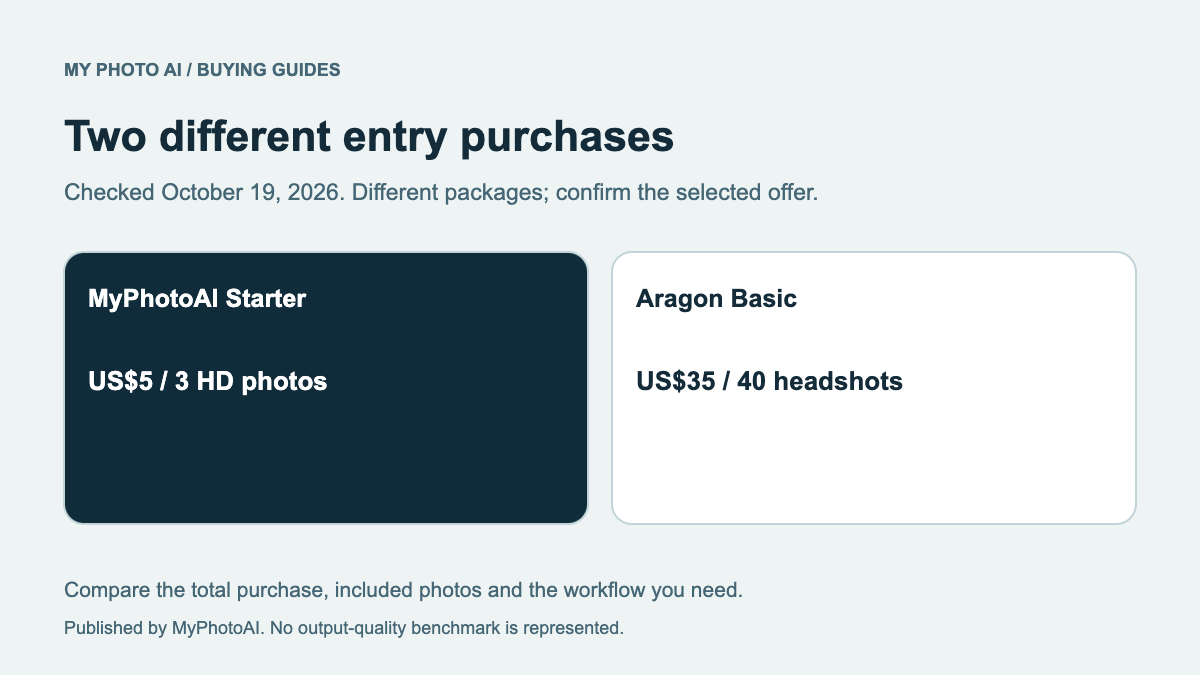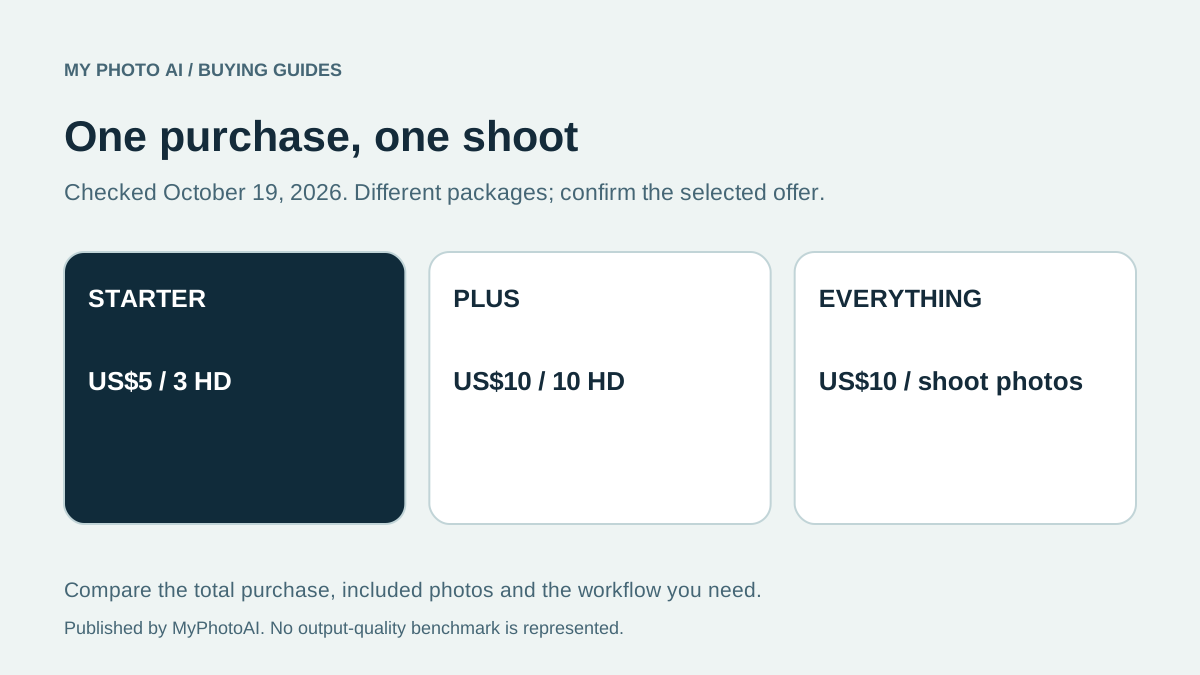
Choose Starter when you want the smaller initial US purchase and three HD photos are enough. Choose Everything when you want the photos from that shoot included rather than limiting yourself to a fixed selection. At the current published US prices, Plus and Everything both cost US$10, so compare the actual allowances before paying.1
This is MyPhotoAI's explanation of its own offer, checked against the pricing page and the released pricing code on October 19, 2026. Your checkout shows the applicable price and currency for your purchase.
Read the allowance beside the price
| Current US option | Price | Included HD photos | Scope |
|---|---|---|---|
| Starter | US$5 | 3 photos | One shoot |
| Plus | US$10 | 10 photos | One shoot |
| Everything | US$10 | Every photo from that shoot | One shoot |
These are the options shown on the pricing page.1 The amount you pay and the photos you can keep are related but separate parts of the decision. Do not read Everything as every photo you will ever generate in the account.
Why the two US$10 options matter
In the current published US offer, Plus specifies 10 photos while Everything includes the photos from the same shoot. If the offer shown to you matches that table and you want all of that shoot's photos, Everything gives the broader allowance at the same listed price.
Check the actual checkout before confirming. Do not buy Plus assuming its name means it includes more photos than Everything. Also do not infer a guaranteed total gallery count from the word Everything: the scope is the photos from one shoot, not a promise of a fixed competitor-sized package.
If you only want a smaller initial purchase, Starter remains the lower US entry option. It does not provide the same download allowance as Everything, so choose based on the photos you want included rather than price alone.
What happens before generation
You can browse sample looks and set up the shoot before buying. Personalized generation begins after payment. The sample gallery is not a free personalized run of your face. The Help page describes the current reference-photo and shoot workflow.2
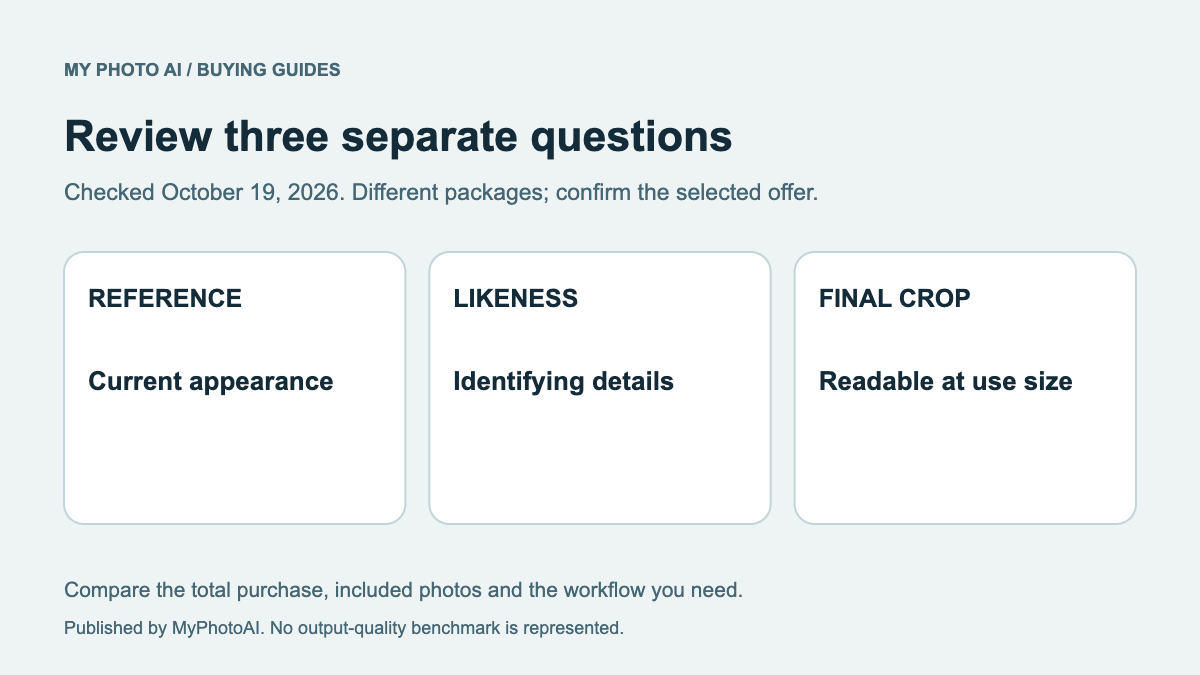
Prepare clear, recent reference photos that represent you. Choose looks appropriate to the intended use, especially when clothing or a badge might imply a profession. Review likeness and visible details before publishing the result.
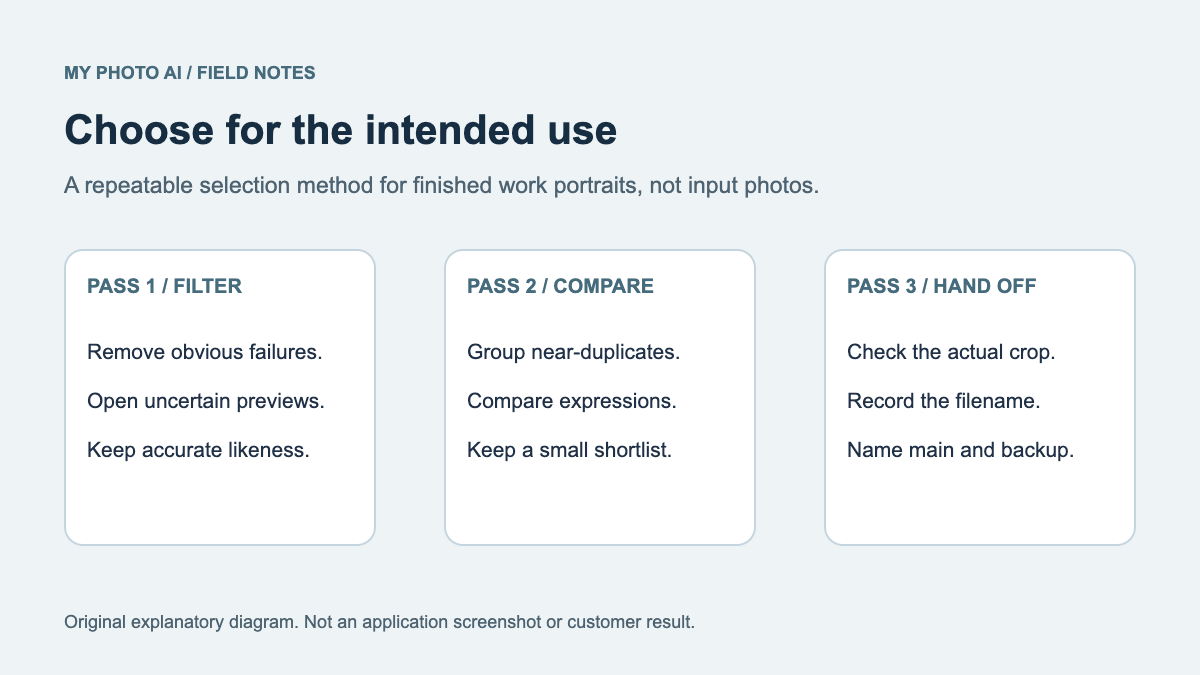
A shoot purchase is not a guarantee that every generated photo will suit every purpose. The contact-sheet selection guide helps you review the actual set. The likeness rubric covers a different question: whether the face still accurately represents you.
Another shoot is another purchase
The offer is a one-time purchase for a shoot, with no subscription. A later shoot requires another purchase.1 Budget for the shoot you intend to start rather than assuming one payment creates an ongoing unlimited plan.
The plan table does not by itself promise a refund, a redo allowance, a particular completion deadline or human retouching. Review the current Terms and ask support about a requirement that could change your purchase. This guide does not replace those terms or invent additional guarantees.
Make a simple choice
Write down the intended use and the maximum amount you want to spend now. If three included HD photos fit and you want to minimize the initial purchase, consider Starter. If you want the shoot's photos included and your checkout shows the current US$10 offer, compare Everything directly with Plus before paying.
Download the MyPhotoAI plan decision sheet, then browse looks and plan your shoot. Keep the final price, included photos and one-shoot scope clear when you make the purchase.
If seeing personalized results before deciding on downloads is part of your buying requirement, the MyPhotoAI versus InstaHeadshots comparison explains the different payment sequences.
For another payment-sequence comparison, MyPhotoAI versus Headshots.com separates a new paid shoot from a single-photo, per-download AI route.
Before paying for a new generation, use the reference-photo selection worksheet to review the source images you intend to use.
If you have only one suitable source image or need post-shoot editing, the Dreamwave workflow comparison identifies the input and purchase details to check before choosing a route.
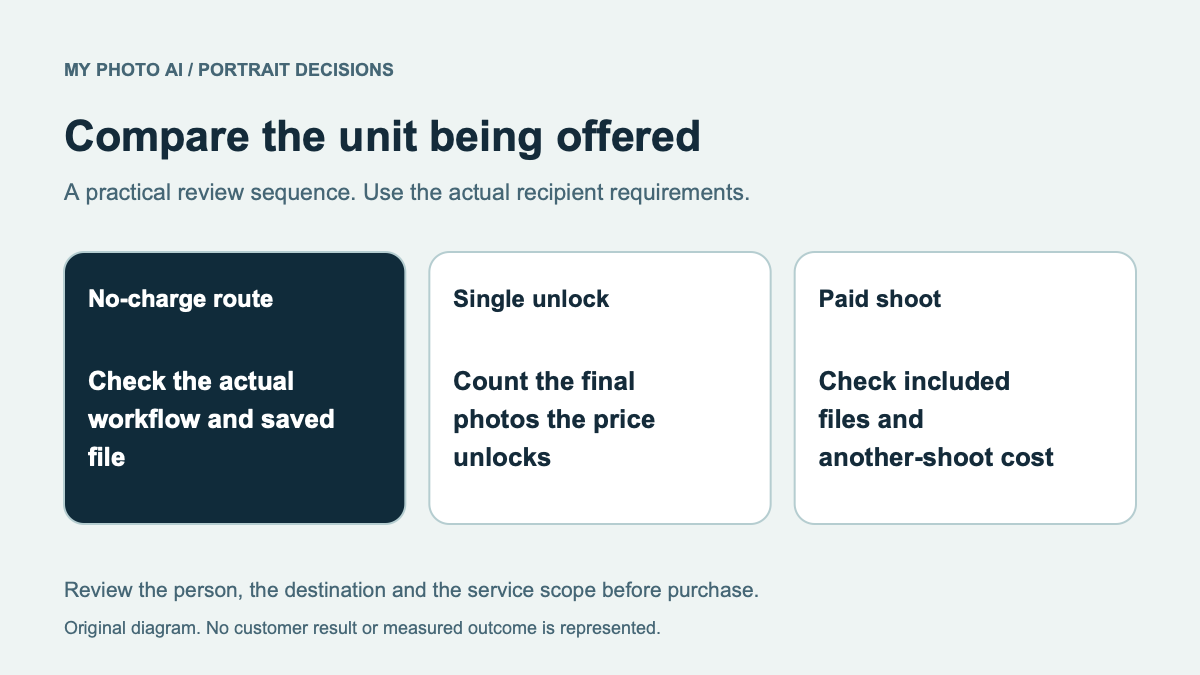
Before buying a portrait for an application, check whether a photo belongs on the resume or whether the recipient wants real agency digitals. A generated shoot does not replace those recipient requirements.
For a different purchase structure, the PhotoAI credit-plan comparison keeps recurring credits separate from a one-time shoot. The PFPMaker comparison separates editing an existing photo from generating a new one.
Compare the AI SuitUp file-size ladder, Headpix one-time packages and PhotoPacks AI pack allowance when checking a different purchase scope.
The HeadshotKiwi comparison checks introductory-price eligibility. The Media.io guide checks credit expiry and the exact headshot route, while the Remaker comparison starts with the reference photos and selected mode.
The Headshottr guide checks current photo counts and outfit scope. The real fake comparison separates euro style bundles from the US offer, while the Quick Headshots guide works through Instant and Custom pricing.
The one-time buying guide separates a shoot from a longer-lived generation package. The Narkis comparison checks finite photo and model allowances, while the HeadshotMaster guide budgets credit packs by actual operation.
Before buying for a platform, name the actual deliverable. The YouTube buying guide separates portrait, banner and watermark files. The Discord guide explains why a photo allowance does not include Nitro, animation or Shop decorations.
Some requests can use an existing suitable photograph or a platform feature. The Facebook image-task guide separates a new still portrait from native photo animation. The Airbnb host guide favors a current real photograph for its documented brief and keeps verification separate from portrait purchases.